Drying Nylon Reliably
- Most consumer dryers (Bambu, eSUN, Polymaker) top out at 70–75°C — below the 80°C minimum nylon needs. They will not adequately dry nylon.
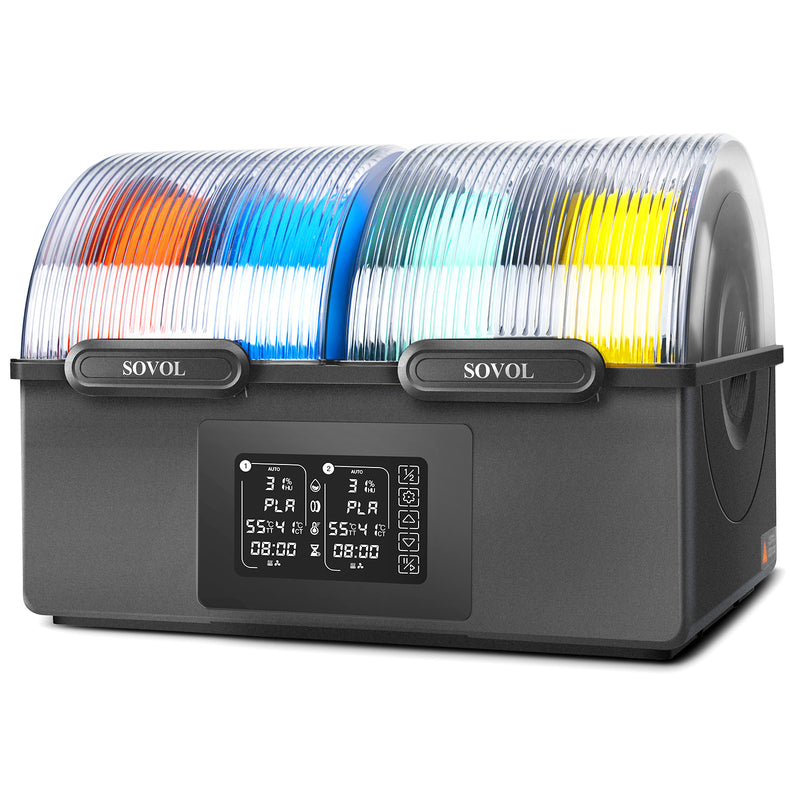
- My pick: Sovol SH03 (~$100) — 85°C, dual independent chambers, 4 spools, truly sealed (physical mechanical shutters). Does everything I need at a price that makes sense. Also sold as the Comgrow SH03.
The goal here is to reliably print Filamentum’s Orca — a Nylon 6 made from 100% recycled fishing nets, and probably the highest-performance recycled filament on the market right now. Filamentum’s own life cycle analysis claims a −98% CO2 impact compared to virgin nylon production. The material competes mechanically with standard engineering nylons, and as a fun bonus, it smells distinctly fishy when printing, which is where the nickname comes from.
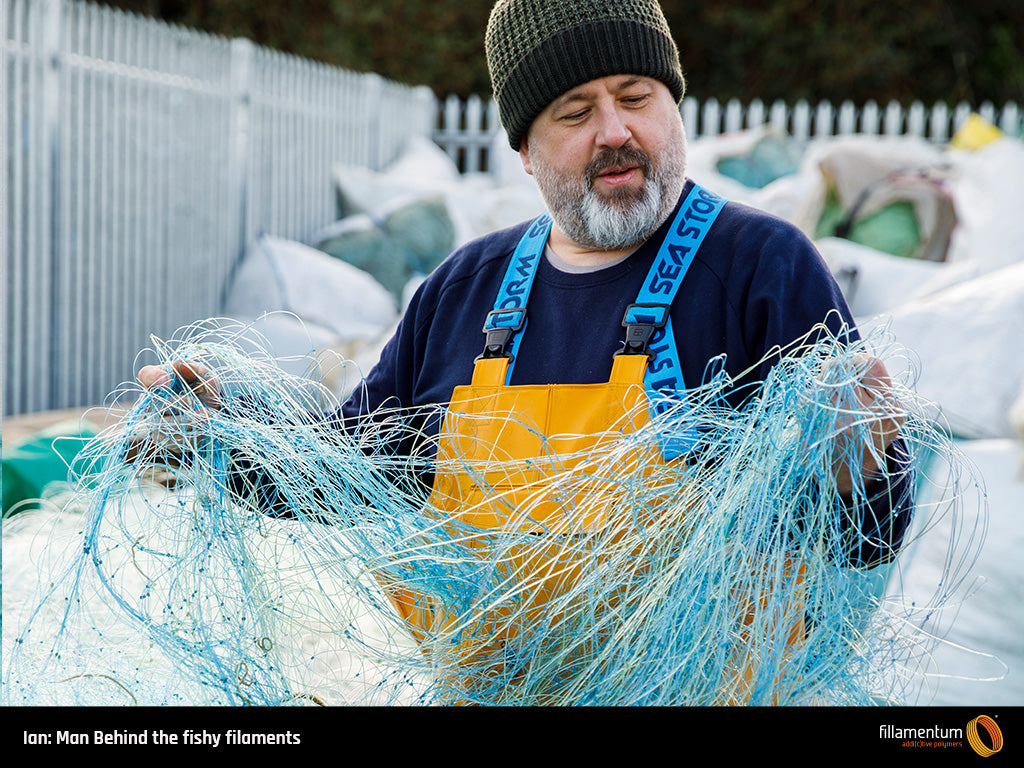
Ian Falconer, the man behind Fishy Filaments — reclaiming fishing nets from Cornwall fishermen and turning them into filament. Photo: Fillamentum
The catch with any high-performance nylon: it absorbs moisture from the air constantly, and wet nylon prints fail in every way imaginable — bubbling, stringing, delamination, weak layers. Everything in this guide applies equally to PAHT-CF and other engineering nylons, but Orca is what drove the research. This is a guide specifically about the drying problem — print settings, hardware configuration, and profiles are separate topics. The obstacle with drying is that most widely-sold consumer dryers physically cannot reach the temperatures nylon requires.
The Temperature Problem
Filamentum recommends drying Orca at 80°C for at least 5 hours — and that requirement is the same for other high-performance nylons like PAHT-CF. Popular consumer dryers from Bambu, eSUN, Polymaker, and others max out at 70–75°C, which is fine for PLA or PETG but not enough for nylon, and the print failures look identical to every other cause, making it easy to diagnose the wrong thing. Running a 70°C dryer longer doesn’t compensate: nylon reaches an equilibrium moisture floor at that temperature that’s above what it needs to print reliably — no amount of additional time gets past it.
| Dryer | Max Temp | Noise | Spools | Dual | Sealed | Airflow | Anneals |
|---|---|---|---|---|---|---|---|
| Sovol SH03 ★ | 85°C | <48dB | 4 | ✓ | ✓ | Active vent† | ✗ |
| Sunlu E2 | 110°C | Loud§ | 2 | ✗ | ✓ | Forced air | ✓ |
| West3D Toaster | 120°C | Quiet* | 4 | ✗ | ✗ | Convection | ✓ |
| Creality Space Pi X4 | 85°C | <40dB | 4 | ✓ | Partial‡ | Desiccant regen | ✗ |
| Bambu AMS HT | 85°C | Quiet* | 1 | ✗ | ✗ | Heated air | ✗ |
| Food dehydrator | ~88°C‡ | Loud | varies | ✗ | ✗ | Forced air | ✗ |
* Quiet per user reviews; no dB spec from manufacturer.
† Motorized vents exhaust humid air during cycle, then seal airtight via physical mechanical shutters.
‡ High temp variance in practice — not recommended. See notes below.
§ Fan noise is a commonly cited complaint in user reviews — significant enough to factor in if the dryer runs in a living or working space.
‡ Creality uses one-way air valves, not physical shutters — community testing shows RH creeps back toward ambient within hours once heating stops. Requires Auto Mode to compensate; SH03 seals passively without it.
Sealed: A sealed dryer prevents the spool from re-absorbing ambient moisture once the cycle ends. Without a true seal, you need to remove the spool promptly — leaving it in an open or leaky dryer as it cools works against everything you just did.
Dryers That Actually Work
Only a handful of dryer types reliably reach the temperatures needed for nylon. Each makes a different tradeoff.
The SH03 does everything I need at a price that makes sense. Two independent 200W heating chambers let you dry nylon and another material at different temperatures simultaneously — four 1kg spools total. I don’t need the extra temperature the E2 provides: nylon is fully satisfied at 80°C, and the SH03 hits that exactly. What I do need is four spool capacity, dual chambers, a passive seal, and a price that doesn’t penalize me for it. The SH03 checks every box.
The venting design is notably smart: motorized vents open to actively exhaust humid air during the drying cycle, then physical mechanical shutters click closed once target humidity is reached. It seals passively — no firmware, no Auto Mode, no cycling on and off. You can leave spools in it between sessions. The built-in nylon preset runs at exactly 80°C. Official lab tests and user measurements place noise at approximately 47.6–48dB at one meter — quiet enough to run unattended in a workspace.
The SH03 is sold under both the Sovol and Comgrow labels — same hardware, same firmware, different badge. Buy whichever is cheaper or easier to ship to you.
Reddit: Praised as a quiet, set-it-and-forget-it dryer — the smart venting design gets called out specifically as a standout feature over dumb-heat competitors.
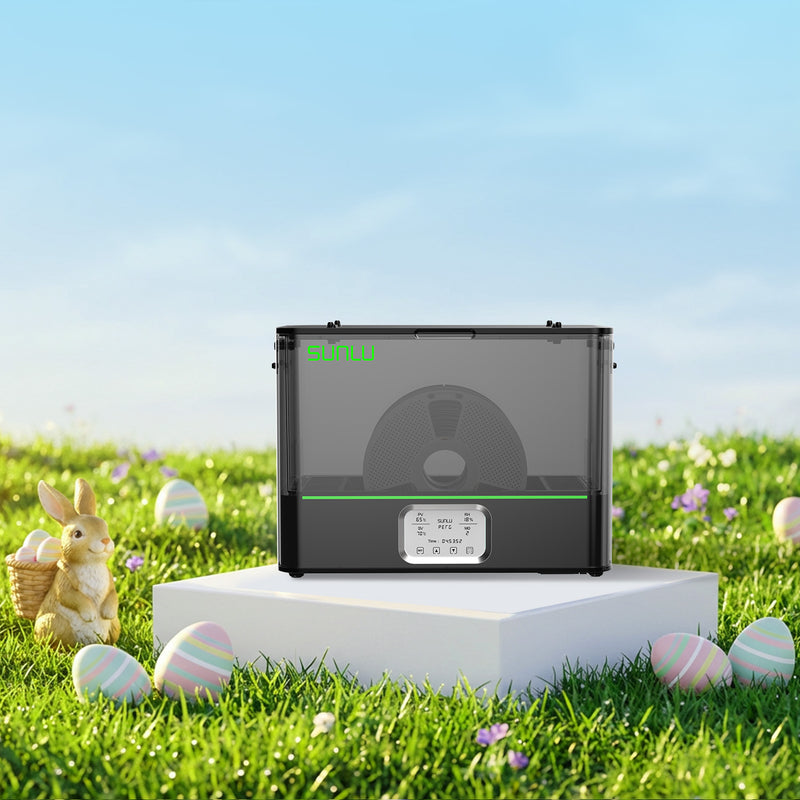
The E2 is the more expensive option for anyone who genuinely needs the extra temperature or annealing capability — not me, and not most people. At 110°C it dries nylon significantly faster than the SH03, and it has a dedicated annealing mode that can harden and stress-relieve printed parts. If you’re regularly printing materials that demand higher temps or you know you want to anneal, the E2 covers that ground well.
It uses a gasket-sealed chamber, holds two 1kg spools (or one 3kg), and is widely available through Amazon and major retailers globally. A heavily saturated nylon spool typically dries fully in 3–4 hours at 110°C.
Fan noise is a significant downside. The E2 runs a loud fan, and it’s consistently the top complaint in user reviews. It’s loud enough that some users run it only when they’re not in the room. For dedicated workshop use it’s fine — but it’s a real factor, not a footnote. The SH03 is measurably quieter.
Reddit: Consistently recommended for PA and PC filaments; fan noise is the most common complaint and users are split on whether it’s tolerable — some run it only unattended.
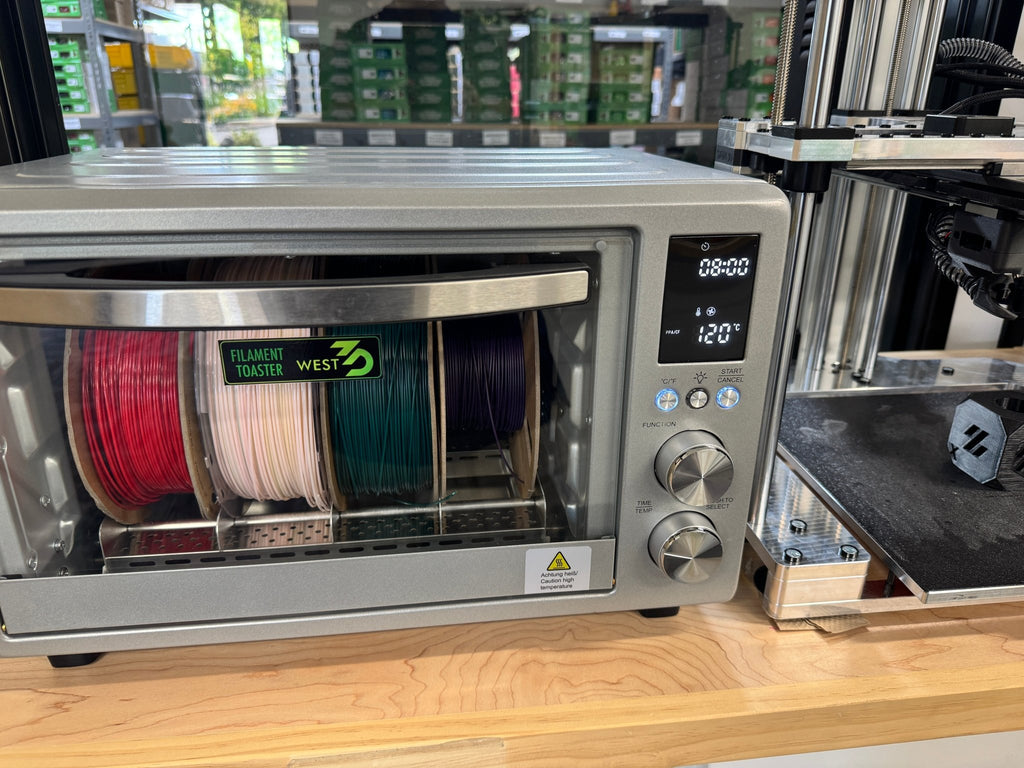
The Filament Toaster has the highest maximum temperature of anything in this guide and the best spool capacity for the price. At 120°C, it exceeds even the Sunlu E2, handles both drying and annealing for PAHT-CF, reaches temperature in under 3 minutes, and holds 4 spools. It comes with an annealing tray included. Users consistently note it’s remarkably quiet compared to other high-temp solutions.
The unit is built on a real toaster oven shell — an enclosure already rated for sustained high heat — rather than plastic-housed consumer dryer components. It is not sealed or airtight; drying is heat-convection only, with no built-in exhaust port or filtration. Ventilation is on you (see the section below).
Spool compatibility: The Toaster requires PC (polycarbonate), metal, or cardboard spools. West3D’s own product page warns that standard plastic spools “may melt even at lower temperatures” — the heating elements are hot enough to deform them regardless of the set temperature. Most PLA, PETG, and many nylon spools ship on standard plastic, which means re-spooling before loading. If you’re only going to own one dryer and your material collection includes anything on standard plastic, this is a hard problem without a clean solution.
Not sealed — you need to be present: The Toaster is an open convection design. When the cycle ends, the spool sits in a warm, non-sealed enclosure as it cools. Ambient humidity starts re-absorbing almost immediately. If you’re not there to pull the spool out promptly, you’re slowly undoing the work. A sealed dryer protects against this by maintaining a low-humidity environment even after the heating cycle completes.
Available from West3D directly, US-only due to the 120VAC power requirement.
Reddit/forums: Generally well-regarded for build quality and heat-up speed; the Batch 2 recall (excess smoke at high temps) is a commonly cited caveat, though West3D handled it with refunds.
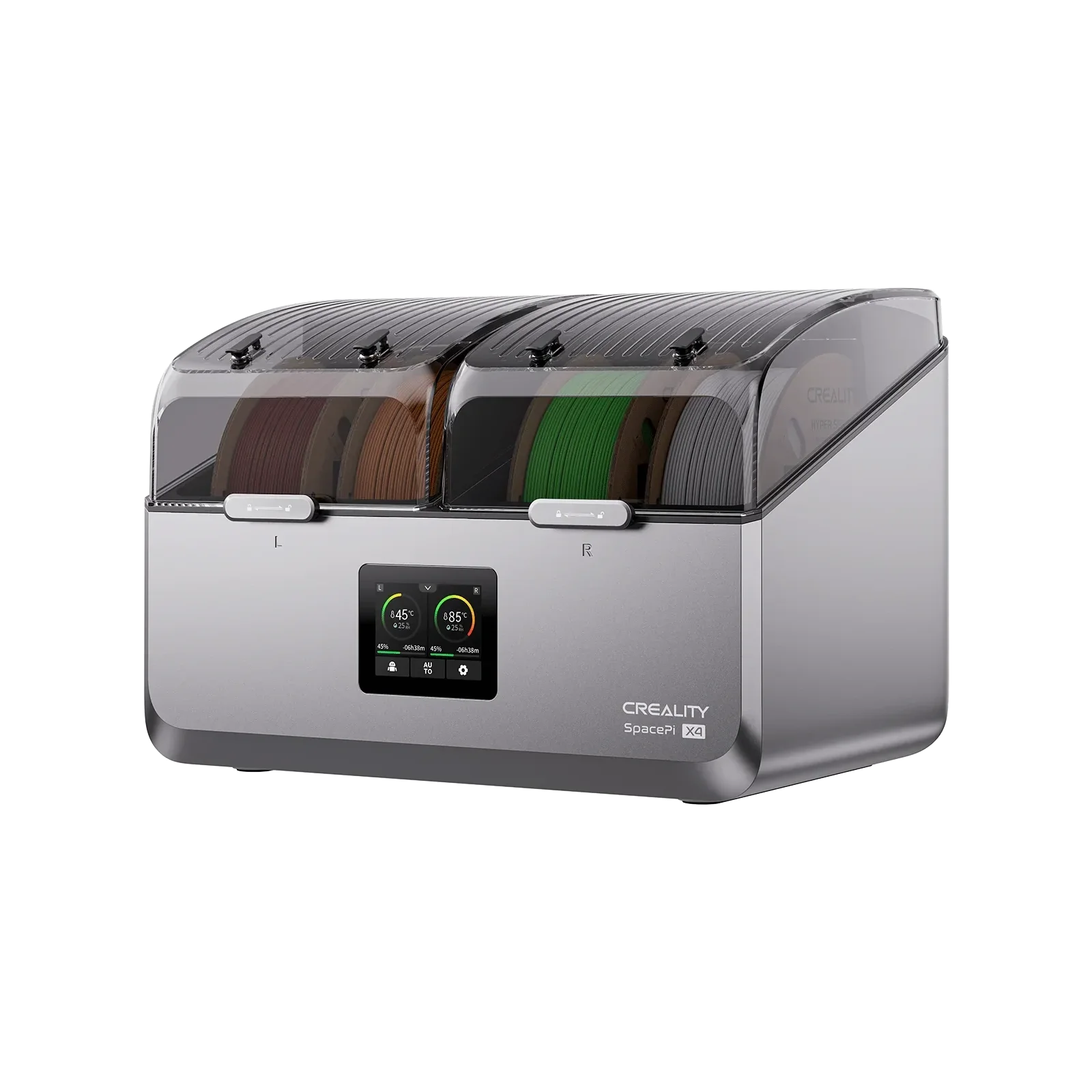
On paper this looks like a straight swap for the SH03 — same 85°C ceiling, dual chambers, 4 spools, active dehumidification. The specs are competitive. The problem is the passive seal.
A reviewer put it plainly: “I thought it would at least be airtight given the price. Ya it dries it… but if you don’t use immediately after moisture creeps in. Now your spool is warm and ready for air to leak in it creating condensation.” This is accurate. The X4 uses one-way air valves rather than physical mechanical shutters. Once the heating cycle ends and the unit cools, community testing consistently shows RH drifting back toward ambient levels within a few hours. The SH03 has motorized vents that physically click shut when the cycle finishes — a passive, hardware seal. The Creality relies on Auto Mode (humidity sensors re-triggering the heater) to compensate for the leaky design. Auto Mode works, but it means the unit is cycling on and off indefinitely, which generates fan noise and depends on firmware behaving correctly. For nylon — a filament that reabsorbs moisture quickly — I’d rather have a dryer that seals by design than one that monitors its own leak. That’s why I’m going with the SH03.
Reddit: The sealing issue is a known and frequently discussed complaint — multiple threads confirm RH creep after cooling, and the PTFE feed tube working itself loose during print sessions is a separate recurring annoyance.
The AMS HT dries to 85°C — same ceiling as the SH03 — holds one spool, and costs significantly more as part of the Bambu ecosystem. Its actual selling point is tight P1S integration: auto-loading, RFID filament recognition, and slicer awareness for hands-off engineering material workflows. That’s a convenience advantage, not a capability one.
One thing worth knowing for TPU: the HT doesn’t feed TPU through the normal AMS mechanism. When printing TPU, it acts as a heated drybox with a dedicated rear pass-through outlet — you feed directly to the extruder, same as any standalone drybox. The regular AMS and AMS 2 Pro don’t support TPU at all.
Reddit/forums: Worthwhile if you’re fully invested in the Bambu stack and want hands-off integration for engineering materials — not compelling next to a standalone dryer at the same drying temperature.
Food dehydrators and air fryers come up as DIY options because they can technically reach temperatures above 80°C. The problem is that neither is built for this task, and temperature variance in both is often substantial. The rated max and the actual temperature at the spool hub can differ by 10°C or more — enough to put you below the threshold without knowing it, or spike above it and risk deforming the spool.
This matters because the cost math doesn’t work in their favor. A couple of nylon spools can easily run $50–$80. A dedicated dryer that actually does the job reliably starts at ~$100. Gambling two spools worth of material on a repurposed appliance with unpredictable temperature behavior isn’t a saving — it’s a coin flip. The SH03 exists at that same price point and was built to do exactly this.
If you already own one and want to experiment with cheap or already-dry filament: verify actual temperature with a probe thermometer first, don’t use it for anything critical, and treat every result as provisional until you’ve confirmed it prints well. But it shouldn’t be the plan going in.
Reddit: Hit-or-miss — occasional success stories from people who verified temps with a probe, but deformed spools and inconsistent results are the more common cautionary tales.
Ventilation and Fume Exposure
Heating nylon to drying temperatures releases volatile organic compounds (VOCs). If you’ve dried nylon before, you know the smell — fishy, amine-like.
HEPA filters alone do not protect against VOCs (only particulates). You need activated carbon, and preferably external ventilation.
For anything beyond PLA or PETG — nylon, PAHT-CF, or other engineering materials — a living space isn’t the right environment regardless of filtration.
If you’re 3D printing, I’d recommend an activated carbon air purifier be one of your first purchases.
Annealing
If you’re buying your first dryer, you probably don’t need to anneal. Nylon is already strong and durable straight off the build plate, and for the vast majority of mechanical parts that’s enough. Simply letting a printed nylon part condition in ambient humidity for a day or two restores impact resistance and toughness for most use cases, with no heat required.
Dry Storage
Your dryer needs to be a good dryer — it doesn’t need to double as a storage solution. A cheap drybox solves storage: any airtight container with a silica gel packet keeps dried spools from re-absorbing between sessions. Don’t let print-while-drying capability or storage features be deciding factors when buying a dryer.
Bottom Line
The Sovol SH03 is my pick — 85°C, four spools across two independent chambers, a passive mechanical seal, and $100. The Sunlu E2 is worth considering if you genuinely need 110°C or annealing capability, but fan noise is a real downside and most people won’t need it. Whatever you end up with, pair it with dry storage for inactive spools and activated carbon filtration if you’re drying indoors.