Backpacking & outdoor use · Sorted lightest to heaviest
Three hard rules, before weight enters the conversation.
It has to hold boiling water. PET out
Fill your bottle with near-boiling water, drop it into a wool sock, push it to the foot of your sleeping bag. Heat lasts hours. On a night where you’re genuinely cold — storm, wet gear, temperature dropping — it can be the difference between miserable and dangerous.
PET deforms under sustained heat and leaches more of whatever it’s going to leach at high temperatures. Every PET bottle in this comparison — SmartWater, the CNOC ThruBottle — is out, regardless of how light it is.
It has to work in winter. Narrow mouth out PET double out
Narrow-mouth openings freeze shut in sub-freezing temperatures. You end up with a full bottle you can’t drink from without stopping to thaw it in your armpit. Wide mouth (63mm) stays usable. Narrow mouth is out.
PET takes a second hit here. The reason you’re reaching for your bottle in winter is often the same reason PET fails — you’re filling it with boiling water to melt snow or make a heat source for your sleeping bag. PET and winter don’t belong in the same sentence.
It has to last. Narrow mouth double out
Bottles that are impossible to clean don’t last — they become biology experiments, then trash. If you’ve ever created the bespoke flavor profile and fungi cocktail that can only result from many days of electrolyte powder added to water from snow melted in the same pot with burnt bean residue, you know. Wide mouth is the only mouth you can actually deal with.
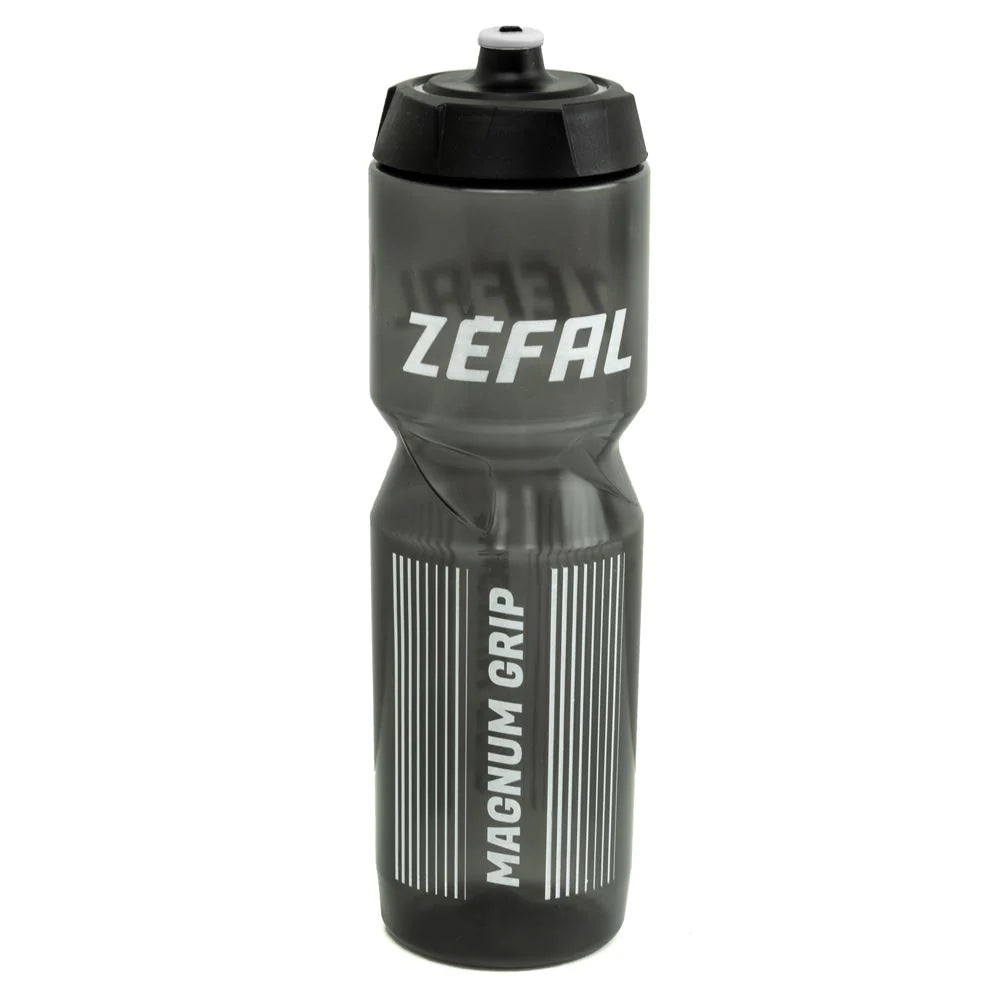
| SmartWater | Smartbottle | Igneous NOBO | Gatorade WM | Hydrapak Breakaway Surge | Zefal Magnum Grip | CNOC ThruBottle | Katadyn BeFree AC | Nalgene HDPE | Nalgene Titan | |
|---|---|---|---|---|---|---|---|---|---|---|
![]() |
![]() |
![]() |
![]() |
![]() |
![]() |
![]() |
![]() |
![]() |
![]() |
|
| Weight & Dimensions | ||||||||||
| Capacity | 1L | 1L | 1L | 1L | 880ml (30oz) | 990ml (33oz) | 1L | 900ml (30oz) | 1L | 1L |
| Weight | 1.4 oz | 2.2 oz | 2.3 oz | 2.4 oz | 2.8 oz | 3.0 oz | 3.2 oz | 3.7 ozincl. filter | 3.8 oz | 6.0 oz |
| vs. Lightest | — | +0.8 oz | +0.9 oz | +1.0 oz | +1.4 oz | +1.6 oz | +1.8 oz | +2.3 oz | +2.4 oz | +4.6 oz |
| Mouth type | Narrow (28mm) | Narrow | Narrow (28mm) | Wide (48mm) | Wide + surge cap | Wide (63mm) + nozzle | Wide + 28mm thread | BeFree filter capIntegrated filter | Wide (63mm) | Wide (63mm) |
| Materials & Safety | ||||||||||
| Material | PET #1 | Polypropylene (PP) | HDPE #2 | HDPE #2 | LDPE | LDPE | PET #1 | Polypropylene (PP)+ hollow fiber & carbon filter | HDPE #2 | Tritan copolyester |
| Material safety | Low riskAvoid heat; trace antimony possible | Very safeHighly chemically stable | Very safeHighly chemically stable | Very safeHighly chemically stable | Very safePolyethylene family; no leaching concerns | Very safePolyethylene family; no leaching concerns | Low riskAvoid heat; trace antimony possible | Very safeGold standard for heat resistance | Very safeHighly chemically stable | DebatedBPA-free; some estrogenic activity studies |
| Durability | ||||||||||
| Squeezable | Slightly | Yes | No | Yes | Yes | Yes | Slightly | No | No | No |
| Filter Compatibility | ||||||||||
| Sawyer Squeeze | Yes28mm thread | LikelyThread unconfirmed | Yes28-410 thread | Yes | UnverifiedSurge cap system | UnverifiedCycling thread | Yes | NoProprietary filter cap | Yes | Yes |
| Katadyn BeFree | No | No | No | No | No | No | No | IntegratedBuilt-in filter system | Yes | Yes |
| SteriPen UV | Yes | Yes | Yes | Yes | Yes | Yes | Yes | NoFilter cap incompatible | Yes | Yes |
| Cost & Availability | ||||||||||
| Approx. price | ~$2or reuse | $12sold as 2-pack | $22 | ~$2–4or reuse | ~$11/bottlesold as 2-pack ($22) | $9 | $13 | $54.95incl. filter | ~$15 | ~$20 |
The polyethylene and polypropylene family. Chemically stable, widely used in food storage and medical applications. LDPE is softer than HDPE but shares the same clean safety profile — no known leaching concerns.
Fine for cold water at room temperature. At high heat, PET can leach trace antimony — a catalyst used in its production. Not appropriate for boiling water.
BPA-free and marketed as safer. Some studies have raised questions about estrogenic activity from other components. Findings are disputed and not yet definitive.
“BPA-free” means one specific compound was removed. It says nothing about what replaced it. Tritan replaced BPA and was marketed as safe — years later, studies started raising questions about its replacement compounds. This is the playbook: chemical gets bad press, manufacturer swaps in a cousin that hasn’t been studied for 40 years, we declare victory and wait.
I asked a major outdoor manufacturer’s customer service about the chemical safety of a shirt I’d bought. Their answer: it was “BPA-free.”
A shirt.
Stick with materials that have long track records — PP, HDPE, stainless, glass — and treat “BPA-free” as marketing, not a safety claim.